Book IMAX tickets in Mumbai: 5 things to know
In Mumbai's premium-format theatrical market, IMAX ticket prices run from ₹400 to over ₹1,200 per seat — a price band wide enough to make the difference between a Laser-equipped auditorium and a…
In Mumbai's premium-format theatrical market, IMAX ticket prices run from ₹400 to over ₹1,200 per seat — a price band wide enough to make the difference between a Laser-equipped auditorium and a Xenon-equipped one a critical yield decision on a single booking. Treat the transaction like a box-office trade: every rupee spent needs a corresponding visual and audio return. Whether you are paying for an opening-weekend Bollywood spectacle or a Hollywood tentpole landing on IMAX, the seating format is the variable that swings the value calculus more than any other.
The IMAX screen count in the city is finite, and the footfall data from past blockbusters confirms a recurring pattern. Laser-equipped venues sell out 48 to 72 hours before opening night. Standard IMAX houses fill closer to show day, often with choice seats still available inside 24 hours. The inventory math — across roughly a half-dozen premium screens — pushes serious moviegoers into a narrow booking window that does not reward last-minute decisions.
Decoding the IMAX experience: Laser versus Xenon projection
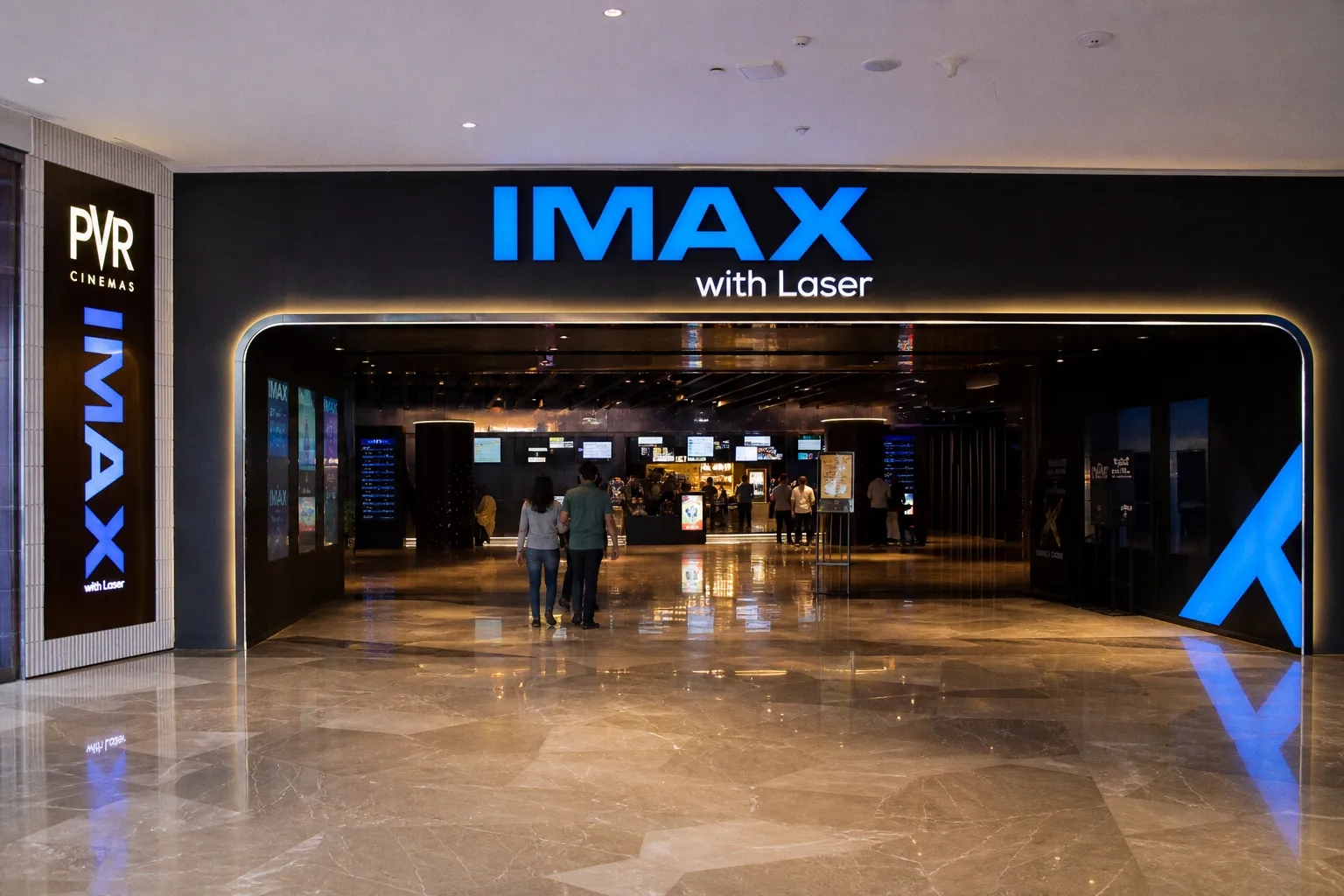
IMAX with Laser is the new premium baseline for Mumbai's top auditoriums. Resolution runs sharper than the legacy projection chain, contrast sits deeper, and color volume expands across a wider brightness spectrum. The image holds up under higher ANSI lumen counts, which matters when a star walks into a sunlit frame or a VFX-heavy set piece hits the screen at full brightness. Theatrical Laser systems ship with 4K resolution support and IMAX's proprietary 1.9:1 aspect ratio — the visible image extends taller, filling more of the auditorium wall than the wider, letterboxed frames typical of standard multiplex screenings. That taller frame is a core part of the IMAX promise: more vertical picture, less wasted screen surface.
IMAX Xenon is the legacy setup. Still branded as IMAX, still offering the trademark aspect ratio scaling on select titles, but the projection chain is older. Whites read softer, blacks grayer, fast motion across dim sequences registers a slight blur that Laser projection eliminates. The audio chain is consistent across both formats — IMAX 12-channel sound stays the same regardless of projector — so the sound delta is smaller than the picture delta. The experiential gap, however, is real enough that the two formats deserve separate pricing, and Mumbai's multiplexes treat them accordingly.
The price gap between Laser and Xenon screenings inside the same cinema chain often runs ₹150 to ₹300 per ticket. On a solo booking the differential feels marginal. For a family of four paying the Laser premium, that ₹600 to ₹1,200 spread becomes a tangible line item on the entertainment budget. Before paying the premium, confirm the specific venue's projection format on the BookMyShow or Paytm listing — chains do not run Laser across all their Mumbai screens, and the listing will specify "IMAX Laser" or simply "IMAX" without the format qualifier for legacy houses. The distinction matters because the brand name alone does not guarantee the technology tier.
A Laser-tier ticket is the only IMAX ticket that delivers the full return on the format's premium pricing. Xenon is a half-step, not the experience the brand is engineered to sell.
Top-tier Mumbai locations: PVR Palladium, INOX R-City, and beyond
Mumbai's IMAX inventory clusters around three anchor locations, with smaller screens distributed across suburban multiplexes. The catchment skews toward the higher-end chains because their territory overlaps the highest per-capita cinema spend in the city. Footfall concentrates accordingly.
| Location | Format | Catchment | Premium Indicator |
|---|---|---|---|
| PVR Phoenix Palladium, Lower Parel | IMAX Laser | South Mumbai, Worli, Mahalaxmi | Highest ticket tier in Mumbai |
| INOX R-City, Ghatkopar | Laser + Xenon | Central Mumbai, Thane, Navi Mumbai | Mid-to-high tier, strong weekend uplift |
| Carnival IMAX, Wadala | Xenon (Laser available on select slots) | Wadala, Sewri, peripheral south-east | Entry-tier IMAX pricing |
PVR Phoenix Palladium screens the city's most expensive IMAX seats — premium recliners push the per-ticket ceiling past ₹1,200 on opening weekends. The catchment draws from South Mumbai's older premium-format audience, a known high-spend, low-frequency demographic. These are moviegoers who book two or three tentpoles a quarter and do not flinch at the format premium; the venue prices accordingly. INOX R-City draws volume because Ghatkopar functions as a transport interchange; footfall stays consistent even on non-opening days and the chain's dual-format setup catches both the Laser-priority buyer and the price-sensitive segment. Carnival IMAX Wadala serves the Wadala–Sewri corridor at the lower end of the IMAX price band — typically the cheapest IMAX ticket in the city on a weekday.
Suburban multiplexes in Andheri, Borivali, and Vashi occasionally run single-screen IMAX setups inherited from earlier upgrade cycles. Format quality varies by location and by show timing — verify the projection system on the booking page before locking the seat. Mumbai's IMAX map is not standardized, and what reads as "IMAX" in Borivali is not the same technical product as "IMAX Laser" at Palladium. The screen dimensions, acoustic treatment, and sightline geometry all vary by venue, which means the seat-picking strategy that works at one hall does not port cleanly to another.
Navigating dynamic pricing: what to expect from your ticket spend
The base IMAX ticket in Mumbai starts near ₹400 for weekday matinees at non-flagship venues. The ceiling clears ₹1,200 for a prime evening show at PVR Phoenix Palladium on a high-demand release — and that ceiling flexes upward during opening-weekend demand spikes. The price spread reflects three compounding variables: location, format, and demand curve.
Location drives the largest premium. Lower Parel and Worli addresses command the highest per-screen revenue across the multiplex chain portfolio. Real estate at those locations costs more, and ticket pricing absorbs that overhead. Format drives the second tier — Laser versus Xenon adds ₹150 to ₹300 per ticket as noted earlier. Demand drives the third and most volatile tier: opening weekends for tentpole Bollywood and Hollywood films push dynamic pricing 20 to 40 percent above the listed base rate.
Dynamic pricing is the least predictable variable. Paytm and BookMyShow do not publish a public algorithm. What is documented: peak slots — Friday 8 PM, Saturday 9 PM, Sunday afternoon — sell first, and the last available seats often carry a surcharge baked directly into the listing price rather than charged at checkout. Premium recliner seats, where offered, sit in a separate pricing tier with their own surge mechanics. The recliner tier at Palladium, for instance, can command a 30 to 50 percent premium over the standard seating row in the same hall, even though both share the same Laser projection and the same 12-channel audio array.
For a value booking, weekday matinees between Monday and Thursday carry the lowest list price and the lowest surge risk. Friday morning shows are priced sharply because the working audience is interested but not always available — a budget-conscious buyer willing to take a half-day can land a prime seat at a non-surge price on opening day. That Friday-morning window is, statistically, the best per-rupee value on a tentpole release day in Mumbai's IMAX market.
Strategic booking: mastering the 3-to-7-day advance window
The 3-to-7-day advance window is the practical booking horizon for IMAX screenings in Mumbai. BookMyShow and Paytm typically open listings 7 days ahead. The PVR INOX proprietary app opens some titles earlier for loyalty-tier members — a feature worth registering for if IMAX bookings are a recurring spend line. Early access on the loyalty app has, on select titles, allowed members to lock center-block seats two to three days before the general listing opens — a meaningful edge when the auditorium holds fewer than 300 seats.
For major releases, the first 48 hours drive the bulk of advance footfall. The IMAX allocation on those screenings behaves like a saturation release window — inventory clears in a narrow band once the listings open, typically 150 to 250 seats per auditorium depending on venue. Records of past Bollywood and Hollywood openings show Laser-equipped IMAX halls selling out 3 to 5 days before release on big titles; Xenon-equipped halls usually carry seats available until 24 to 48 hours before. The format premium translates directly into lead time for the booking decision. The buyer who waits past the 5-day mark on a Laser hall is already competing for residual inventory.
Booking inside the 3-day window means accepting leftover inventory. The seats tend to be front-row or extreme sides — both compromises the format cannot fully offset. A front-row IMAX seat turns the giant screen into a fisheye-lens experience. A side seat loses the calibrated speaker alignment the IMAX sound engineer dialed in for the center. Booking outside the 7-day window is rarely possible for the highest-demand titles; the listing simply does not exist yet, and refreshing the app daily burns attention better spent on the actual booking when it drops.
Lock the Laser-format show 5 days ahead. Yield drops sharply inside the 3-day mark for tentpole weekends.
Optimizing your view: selecting the best seats
The center block, roughly rows F to J in a typical Mumbai IMAX auditorium, is the value zone. Sound calibration in IMAX halls points the speaker array forward and slightly down; the dead-center seats take the full impact of low-frequency effects and surround panning without the timing offset that side seats introduce. The image brightness in Laser halls is calibrated for seats at roughly two-thirds auditorium depth — the screen brightness falls off perceptibly past row M in a hall with a steep rake. Moving one row closer to center from an edge seat often yields a bigger experiential gain than moving three rows closer to the screen from the same edge.
For premium recliner venues — Palladium, INOX R-City's premium tier — the recliner footrest extension shifts the sightline slightly forward and up. Aim two rows farther back than you would in a standard seating layout to recover the same effective angle. Aisle seats in a recliner layout lose about 10 percent of the surround panning because the side-firing channels are partially blocked by an empty seat. The acoustic difference is subtle on dialogue-heavy scenes but audible on bass-heavy action sequences where the side channels carry directional low-frequency effects.
Booking platforms display the seat map in real time. Use the map. Do not book a seat by price alone. The single most expensive seat is not always the best seat; premium recliners near the screen can sacrifice the aspect ratio IMAX is engineered to deliver. The biggest spend does not always equal the highest yield per rupee, and on a finite inventory, the center-block aisle-adjacent seat is almost always the safe trade.
The transactional math on IMAX in Mumbai lands here: book the Laser format at a mid-tier venue before you book a more expensive chair at a Xenon-equipped hall. Yield per rupee favors the technical premium over the furniture premium. Confirm the projection system on the booking page before any payment. Lock the seat 5 days ahead for tentpole weekends, 3 days for everything else. Pick the center block, rows F to J — unless the venue runs a recliner layout, in which case shift back one row to recover the sightline.
For broader reading on the entertainment economy, streaming-release economics, and lifestyle coverage that frames the auditorium as one line item in a wider cultural budget, see this news and culture feed for context. Treat the IMAX booking the way a box-office analyst treats a release slate: every line item needs a measurable return, and the highest-spend option is rarely the highest-yield one.