Claim Your BookMyShow Ticket Tax Refund in 3 Steps
The "3-step tax refund" circulating across social media doesn't survive a basic balance-sheet audit. BookMyShow operates as a ticket aggregator, not a tax authority. The platform neither collects entertainment tax from moviegoers nor refunds it.
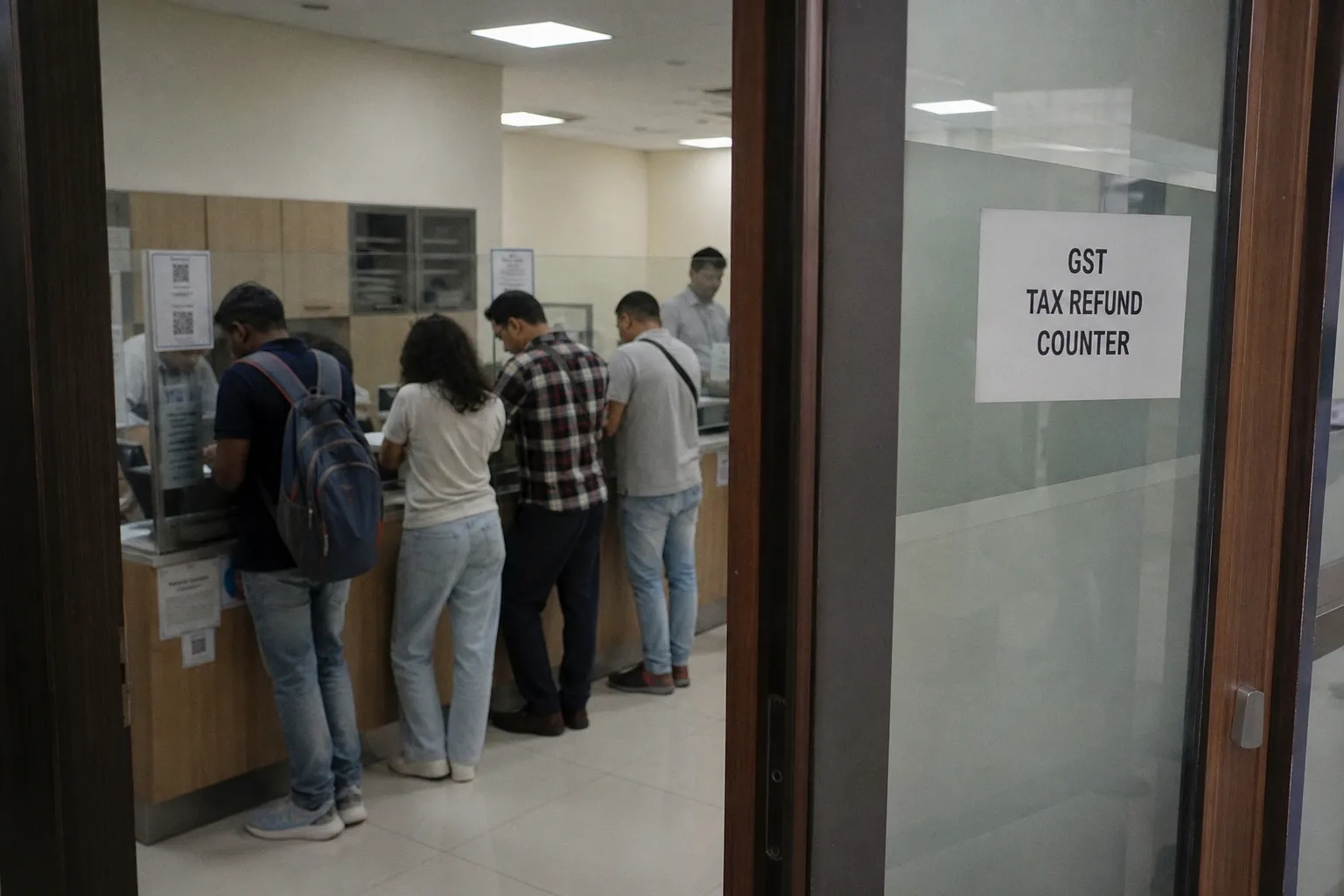
The Reality of Entertainment Tax and GST in Indian Cinemas
India's cinema taxation underwent a structural reset on July 1, 2017, when GST replaced the patchwork of state-level entertainment taxes. Pre-GST, rates varied wildly, with some states imposing 30%+ on tickets while others offered full exemptions. Post-GST, the framework standardized into two slabs: 12% GST on tickets priced at ₹100 or below, and 18% GST on tickets priced above ₹100.
That ₹100 threshold creates a critical pricing pivot for exhibitors. Multiplex chains routinely calibrate base ticket prices just below or above the mark to optimize footfall yield versus tax incidence. A ₹99 ticket attracts 12% GST; a ₹101 ticket attracts 18%. The 6-point differential compounds across thousands of daily screenings. For a chain running 500 screens at 40% occupancy, the pricing decision on a single rupee can swing quarterly tax outflows by lakhs.
State-level variations still exist. The headline 12% and 18% are CGST rates, but states levy SGST (State GST) of equal amount, effectively doubling the consumer-facing burden. Some states stack additional local body taxes or entertainment levies on top. The cumulative tax incidence on a premium multiplex ticket in high-revenue territories can reach 28%+, eroding the exhibitor's per-footfall margin and compressing operating ROI.
| Tax Component | Rate (Tickets ≤₹100) | Rate (Tickets >₹100) | Remitted By |
|---|---|---|---|
| CGST | 6% | 9% | Cinema Operator |
| SGST | 6% | 9% | Cinema Operator |
| Total GST | 12% | 18% | Cinema Operator |
| Local Levies | Varies by state | Varies by state | Cinema Operator |
The booking aggregator's revenue line is service commission, typically ₹10–₹30 per ticket, plus convenience fees. Tax is not part of the aggregator's throughput. It passes through the cinema operator's books alone.
Why Individual Moviegoers Cannot Claim Tax Refunds
The legal distinction matters here. A "refund" implies return of money already paid to the collecting entity. A "tax credit" implies offset against tax liability owed to the government. Individual moviegoers carry no GST liability against which to offset cinema ticket tax. They paid tax as end consumers, embedded in the ticket price. The tax flowed to the government via the cinema operator. There is no refund mechanism because there is no credit entitlement.
BookMyShow's role in this chain is strictly intermediary. The platform aggregates inventory from thousands of cinema screens, charges the consumer the full ticket price including embedded GST, remits the gross ticket value to the cinema operator minus its service fee, and exits the transaction. The cinema operator, not BookMyShow, files GST returns and remits the tax component to the government.
The aggregator never holds the tax. It cannot refund what it never possessed. Any "3-step process" circulating online either misunderstands this revenue flow or references a different mechanism entirely, typically GST Input Tax Credit available to registered businesses.
BookMyShow collects zero entertainment tax. The cinema operator collects, remits, and reports. The aggregator's revenue line is commission, not tax pass-through.
For individual consumers, the only path to reduce tax outflow is pre-purchase: select a screening priced at or below ₹100, attend a tax-free government-declared screening, or choose a single-screen cinema in a low-tax state. Post-purchase, the tax outflow is terminal.
Understanding GST Input Tax Credit for Corporate Bookings
Registered businesses with valid GSTIN (GST Identification Number) can claim Input Tax Credit on movie tickets, provided three conditions hold: the expense is incurred for business purposes (client entertainment, employee engagement, brand promotion), the cinema issues a GST-compliant invoice embedding the business's GSTIN, and the business uses the ticket expense in the course of furtherance of business.
This is not a "refund." It is a credit offset. The business paid GST on the ticket; it claims that GST as a credit against GST it owes on its own output supply. The net effect is tax recovery, but only for entities with output GST liability.
For a corporate buyer purchasing 50 tickets monthly for client meetings at an average ticket price of ₹500, the math looks like this: total ticket value ₹25,000, GST component at 18% is ₹4,500, recoverable as ITC ₹4,500, effective post-credit spend ₹25,000. The ₹4,500 is not refunded to the corporate bank account. It reduces the next GST remittance. For high-volume entertainment spenders in advertising, media, or hospitality sectors, the ITC yield is meaningful.
For individual consumers spending ₹500 on a weekend show, the mechanism doesn't apply. There is no ITC to claim because there is no output GST liability. The "3-step refund" claim collapses at this basic eligibility test.
ITC is not a refund. It is a credit offset available only to GST-registered businesses with output tax liability.
How to Secure a GST-Compliant Invoice for Business Expenses
For the narrow audience that qualifies, corporate buyers and registered businesses, the process on BookMyShow requires pre-payment configuration:
1. At checkout, locate the "Have a GSTIN?" or "Claim GST Invoice" field before completing payment
2. Enter the GSTIN, company name, and billing address as registered with the GST portal
3. Complete the transaction; the GST-compliant invoice arrives via email with the GSTIN embedded
The invoice must be retained for ITC claims during monthly or quarterly GST return filing, depending on the business's turnover slab. No retroactive GSTIN application exists. Once a ticket is purchased without GSTIN details, the invoice lists the buyer's personal information, rendering it ineligible for ITC claim.
The configuration window is narrow. The field appears at checkout, not post-purchase. Corporate buyers with frequent entertainment budgets typically maintain dedicated corporate accounts through BookMyShow Business, where bulk bookings auto-generate GST-compliant invoicing. For occasional corporate buyers, missing the prompt means losing the credit yield entirely, a sunk cost on the margin.
Navigating State-Level Tax Variations and Cinema Pricing
The ₹100 GST threshold reshaped exhibition economics across India. Multiplex operators in high-footfall urban markets, Mumbai, Bengaluru, Delhi NCR, Hyderabad, routinely price tickets between ₹200 and ₹500 for prime-time shows, squarely in the 18% bracket. Single-screen cinemas in tier-2 and tier-3 markets price below ₹100 to attract price-sensitive audiences, staying in the 12% bracket. The pricing architecture directly reflects footfall elasticity and yield management strategy.
State-level exemptions remain the wild card. Some states offer full entertainment tax exemption for films declared "tax-free" by the state government, typically regional language productions, films with cultural significance, or marquee releases during festival windows. During such windows, the effective ticket price drops by 18%, boosting footfalls but compressing exhibitor yield. Producers benefit from higher occupancy and downstream ancillary revenue; exhibitors absorb the short-term margin hit in exchange for volume throughput.
For investors tracking the sector, the takeaway is straightforward. GST standardization centralized the framework while preserving state-level levers. The "tax-free" announcement remains a tactical tool for state governments to boost local film industries, court producers, or mark cultural milestones.
For the average moviegoer chasing a refund, the math is equally straightforward. The tax is consumed at point of sale. It funds state and central government revenue. It is not recoverable through any consumer-facing channel.
The Bottom Line on the "3-Step Refund"
The viral claim collapses under structural scrutiny. BookMyShow is an aggregator. The platform collects ticket revenue, deducts its service fee, and remits the balance to cinema operators. The operator remits GST to the government. The consumer's tax outflow is terminal. No individual refund mechanism exists. No 3-step process can reverse the flow.
Three factual conclusions hold for the record:
1. No individual tax refund mechanism exists for cinema tickets under Indian GST law
2. GST Input Tax Credit applies only to GST-registered businesses with output tax liability and valid GSTIN-tagged invoices
3. State-level "tax-free" announcements reduce embedded tax at point of sale, they do not refund it post-purchase
For corporate buyers, the ITC yield is real and recoverable. For individual consumers, the path to tax efficiency runs through ticket selection and timing, not through any aggregator's checkout flow. The "3-step refund" is a myth dressed in compliance jargon.
For practical guidance on managing discretionary spend, optimizing entertainment budgets, and navigating consumer finance decisions across categories, diziplot.com offers accessible breakdowns of the mechanics that shape everyday spending.