Compare Netflix vs Prime Hindi web series list to subscribe
The real contest between Netflix and Prime Video in India is not merely about who has the longer Hindi web series list. It is about temperament.
That difference matters because a subscription is no longer a casual monthly indulgence. With Netflix India plans running from ₹149 per month for Mobile to ₹649 per month for Premium 4K, and Amazon Prime membership priced at ₹299 monthly, ₹599 for three months, or ₹1,499 annually, the choice asks a practical question wrapped in a cultural one: what kind of stories do you actually return to after dinner, on a Sunday afternoon, or during that late-night scroll when the first episode must earn your attention in ten minutes?
Content DNA: gritty precision versus franchise warmth
Netflix India’s Hindi originals have usually carried the feel of curated ambition. Sacred Games did not just announce the platform’s Indian original era with scale; it gave streaming audiences a new visual grammar for the Hindi crime saga. The city was not simply a backdrop. Mumbai became an organism of alleys, political memory, bruised masculinity, and spiritual dread. Its pacing could be feverish, but its appeal lay in the way each character arc seemed to pull from a larger moral rot.
Delhi Crime is perhaps the more disciplined example. It understands restraint. The camera does not need to shout because the procedural structure carries enough weight. The thematic resonance comes from watching institutions under pressure: tired officers, moral exhaustion, the burden of public grief, and the unbearable labour of doing a job inside a broken system. It is not “binge” television in the empty sense of the word; it is television that trusts silence, fatigue, and process.
Then there is The Railway Men, which brings Netflix’s production polish to a disaster drama shaped by urgency and collective courage. Its strength lies not only in recreating crisis but in how it frames ordinary men within an extraordinary rupture. The visual grammar is more classical, more emotionally legible, and designed for viewers who want historical trauma translated through human-scale suspense.
Prime Video’s Hindi web series list has a different heartbeat. Mirzapur is not subtle, and it has never pretended to be. Its world is built on appetite: power, revenge, inheritance, guns, bruised ego, and dialogue that audiences quote because the writing understands performance as spectacle. Where Netflix often leans into the prestige of tension, Mirzapur leans into the pleasure of escalation.
The Family Man sits in an especially interesting place. It is a spy thriller, yes, but its enduring charm comes from domestic interruption. Srikant Tiwari’s character arc works because national security and middle-class family life keep colliding in scenes that are funny, anxious, and unexpectedly tender. The show’s pacing is clever: it lets a school conversation, a kitchen quarrel, or a bureaucratic delay breathe before returning to chase sequences and geopolitical stakes.
And then there is Panchayat, Prime Video’s great soft-power weapon. It has none of the obvious swagger of a gangster franchise, yet its hold on the audience is formidable. Its craft is in observation: the pause before a joke lands, the dusty geometry of the village office, the tiny humiliations of ambition meeting reality. Panchayat proves that mass appeal does not always require noise. Sometimes it requires the patience to let people sit on a charpai and reveal an entire social world through one half-awkward conversation.
Netflix often sells intensity; Prime Video often sells returnability. One grips the wrist, the other keeps a chair ready.
The Hindi web series list: what each platform tells you about its viewer
A good platform catalogue is not random. It reveals an imagined viewer.
Netflix seems to imagine someone who values compression, finish, and tonal sharpness. Its strongest Hindi titles often come with a sense of event television: the season arrives, the conversation spikes, critics dissect the performances, and the show either joins the canon or disappears into the platform’s vast international shelves. That is both its power and its problem. Netflix can make a Hindi series feel premium, but its library experience sometimes encourages restlessness. You finish one intense drama and then spend twenty minutes hovering over thumbnails, looking for something that matches the same emotional voltage.
Prime Video imagines a household more than an individual. That is not a criticism. In India, streaming is still frequently communal, negotiated, and mood-based. One person wants crime, another wants comedy, someone else wants a familiar actor, and the family account becomes a messy democratic space. Prime’s Hindi web series list benefits from that elasticity. The Family Man can satisfy thriller viewers and comedy viewers at once. Panchayat travels across age groups. Mirzapur brings the franchise faithful back because its world has become a kind of pop-cultural territory.
Here is the cleaner way to read the difference:
| Viewing priority | Netflix India | Prime Video India |
|---|---|---|
| Prestige Hindi originals | Strong, especially with Delhi Crime, Sacred Games, The Railway Men | Strong in a more mainstream, franchise-led way |
| Repeat comfort viewing | More title-dependent; intense dramas may not invite casual rewatching | Higher, especially with Panchayat and The Family Man |
| Crime and institutional drama | Often polished, moody, tightly produced | Often broader, more dialogue-driven, more pulpy |
| Family or mixed-household appeal | Present, but not always the main identity | A major strength of the catalogue |
| Discovery mood | Best when you want a specific high-quality drama | Best when you want familiar worlds and tonal variety |
This is why “which Hindi web series list is better?” is the wrong first question. The better question is: do you want your streaming platform to challenge your attention, or to become part of your weekly rhythm?
Pricing changes the emotional equation
The subscription model is where the artistic argument becomes domestic accounting.
Netflix India is straightforward and standalone. You pay for entertainment, and the tier determines the experience. The Mobile plan at ₹149 per month is the entry point, while the Premium 4K plan goes up to ₹649 per month. There is no annual payment option for individual plans, so Netflix remains a monthly decision. That can feel flexible, but it also means the platform must justify itself repeatedly.
Prime Video is accessed primarily through Amazon Prime membership: ₹299 per month, ₹599 for three months, or ₹1,499 per year. The important distinction is that Prime is not selling only video. It comes bundled with Amazon’s wider e-commerce ecosystem, including shopping-related benefits and music. So the price comparison is not quite one-to-one. If you already use Amazon frequently, Prime Video can feel like a cultural bonus attached to a practical service. If you do not, the entertainment catalogue has to do more persuasive work.
A blunt price table helps, but only up to a point:
| Subscription route | Current India pricing | What you are really buying |
|---|---|---|
| Netflix Mobile | ₹149/month | Standalone streaming on a mobile-first plan |
| Netflix Premium | ₹649/month | Higher-end standalone streaming with 4K access |
| Amazon Prime Monthly | ₹299/month | Prime Video plus broader Amazon Prime benefits |
| Amazon Prime Quarterly | ₹599/3 months | A middle commitment with bundled ecosystem value |
| Amazon Prime Annual | ₹1,499/year | Best for those who use both shopping benefits and video regularly |
The craft of a show and the cost of a plan meet in surprisingly intimate ways. A viewer who wants Delhi Crime in the best possible resolution on a large television is not making the same choice as a commuter watching episodes on a phone. A family using one account across shopping, music, and streaming has a different value map from a single viewer who only wants prestige series and international originals.
There is also the question of subscription fatigue. Indian audiences now navigate not one streaming bill but several: Netflix, Prime Video, Disney+ Hotstar, regional OTT apps, music subscriptions, sports rights, and occasional add-ons. In that landscape, a Hindi web series list must do more than look impressive. It must justify staying on the debit card.
The ecosystem advantage: why Prime feels stickier
Prime Video’s advantage is not only content. It is placement. It sits inside an everyday Amazon habit, and that changes how viewers perceive value. You may open the app for a delivery update, remember the annual membership, and then drift into Prime Video at night. The service benefits from being part of a larger routine.
This is similar to how people evaluate institutions beyond their headline offering; a university, for instance, is not just a course catalogue but also an environment, a rhythm, and a culture, which is why guides on why campus culture matters for international applicants can feel oddly relevant when thinking about streaming ecosystems too. The surroundings shape the experience.
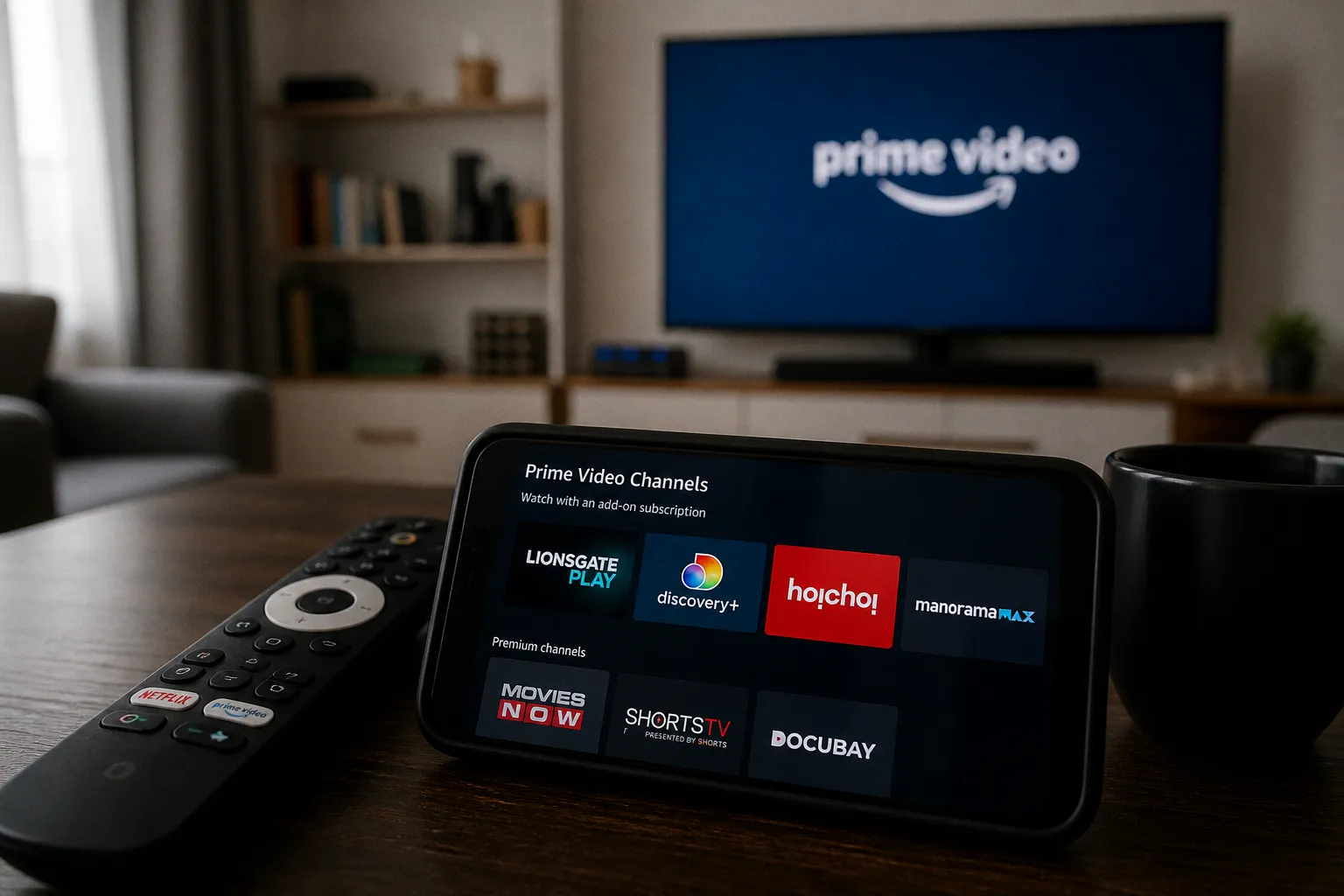
Prime Video Channels adds another layer. Within the Prime Video interface, users can subscribe to add-on services such as Lionsgate Play or Discovery+. This can be convenient for viewers who dislike app-hopping, though it can also blur the sense of what is included and what costs extra. The platform becomes a marketplace of entertainment, not merely a library.
Netflix’s advantage, meanwhile, is purity. Open Netflix and the proposition is clear: watch. There is no shopping aura, no delivery ecosystem, no add-on marketplace in the same sense. This focus helps its brand. A Netflix original still carries a certain expectation of finish, even when the individual title may not fully deliver. The interface is built around the act of choosing a story, and that gives the platform a clean psychological identity.
Prime Video wins time by living inside a larger habit; Netflix wins attention by insisting that entertainment is the whole point.
Resolution, devices, and the way India actually watches
It is easy to discuss subscription tiers as if everyone watches in a perfectly calibrated living room. But Indian streaming has always been more varied than that. A Hindi series may be watched on a metro commute, in a paying guest room, on a family television after dinner, or in fragments between work calls. This is where Netflix’s tiered model becomes more than a pricing footnote.
The ₹149 Mobile plan makes sense for the viewer whose screen is personal and portable. It is not pretending to be a premium home-theatre proposition. But if Netflix is your primary platform for high-production dramas, and if you care about the texture of low-light scenes, crowd sequences, or the controlled visual grammar of a show like Delhi Crime, the higher plans become more meaningful. Resolution is not vanity when the show’s mood depends on shadow, detail, and atmosphere.
Prime Video’s membership structure is less about resolution tiers in the way Netflix’s public plan ladder is experienced by consumers, and more about access through a broader Prime identity. For many users, that simplicity is appealing: pay for Prime, enter the catalogue, and let the household use it. The friction appears elsewhere, especially when browsing reveals titles that require channel subscriptions or rentals in some cases. That is not necessarily a flaw, but it does require attention from the viewer.
The real-world questions sound less glamorous than a platform war, but they matter:
1. Do you watch alone or as a household?
Netflix’s standalone model may suit individual taste more sharply, while Prime’s mix of thrillers, comedy-dramas, and familiar franchises often serves shared viewing better.
2. Do you chase new prestige dramas or return to known worlds?
If your ideal weekend is a serious, tightly made limited series, Netflix has a strong argument. If you want the comfort of returning to Phulera or the adrenaline of a franchise universe, Prime has the stronger emotional memory.
3. Do you already use Amazon Prime benefits?
If yes, Prime Video’s cost feels absorbed into a larger routine. If not, judge it as a streaming subscription on its own merits.
4. Do you care about the highest visual quality?
Netflix makes that a visible tier decision. For cinematic dramas, that may influence how satisfying the viewing experience feels.
5. Do add-on channels appeal to you or annoy you?
Prime Video Channels can centralise entertainment, but viewers who prefer a simple “everything here is included” feeling may find the layered model less elegant.
The shows that define the choice
A platform’s identity is most honestly revealed by the shows people cite without needing to look them up.
For Netflix, Sacred Games remains foundational because it expanded the ambition of Hindi streaming drama. It brought literary density, star power, and a willingness to let darkness seep into form as well as plot. Even now, its influence is visible whenever a crime series tries to make the city feel mythic.
Delhi Crime gives Netflix its moral seriousness. Its pacing is not designed for casual background viewing; it asks for attention and rewards it with procedural integrity. Performances matter here not as star turns but as accumulations of exhaustion, duty, and contained grief.
The Railway Men shows another Netflix strength: the ability to mount a polished ensemble drama around real historical pain while keeping the narrative accessible. It is crafted for emotional immediacy, but it still belongs to the platform’s broader appetite for serious, high-stakes storytelling.
Prime Video’s defining Hindi titles speak a different language. Mirzapur is world-building through dominance and danger. Its visual grammar is less restrained, its pleasures more operatic, its character arcs often shaped by revenge and succession. It is the kind of series that becomes part of meme culture, dialogue culture, and fan anticipation.
The Family Man is Prime’s tonal masterstroke. Its genius lies in balance: spy craft without losing humour, action without abandoning marriage, national anxiety filtered through the life of a man who cannot always manage his own home. The show’s pacing allows contradiction, and that is why it feels so alive.
Panchayat may be the most quietly radical of the lot. In a streaming universe crowded with violence and urgency, it trusts decency, awkwardness, and gradual affection. Its character arcs unfold in small gestures. A glance, a bureaucratic absurdity, a village meeting, a reluctant friendship — these become the engine. It gives Prime Video a warmth Netflix does not always foreground in its Hindi slate.
So, which subscription has the stronger Hindi web series list?
If your taste leans toward intense dramas with high production finish, Netflix remains the more concentrated choice. Its best Hindi series carry a crafted seriousness: carefully modulated performances, atmospheric direction, and themes that sit heavily after the episode ends. It is particularly persuasive for viewers who do not mind paying for a standalone entertainment service and who value the premium feel of select originals.
If your taste leans toward recurring characters, broader tonal range, and shows that become part of household conversation, Prime Video has the stronger everyday case. Mirzapur, The Family Man, and Panchayat cover three very different emotional registers: violence, espionage-comedy, and village-life tenderness. Add the annual Prime membership value and the wider Amazon ecosystem, and the platform becomes difficult to dismiss, especially for families or regular Amazon users.
The fairest verdict is not that one is objectively better. The stronger choice depends on your viewing rhythm.
Choose Netflix if you want polished intensity, crime drama, institutional storytelling, and a more focused streaming identity. Choose Prime Video if you want franchise familiarity, tonal variety, strong repeat value, and the practical advantage of a bundled membership.
In the current Indian OTT landscape, the most revealing thing about the Netflix-versus-Prime debate is that both platforms have helped shape what Hindi web series can now be. One has elevated the prestige drama; the other has deepened the franchise and comfort-viewing ecosystem. Between them sits the modern Indian viewer: impatient, loyal, price-conscious, emotionally generous, and fully aware that the next great show may arrive not with a theatrical Friday roar, but quietly, on an app already waiting on the phone.