Global box office growth continues as premium experiences drive evolution - Señal News
Global box office surged 7% in 2025 to $34.6 billion, and Futuresource Consulting forecasts another 3% climb in 2026.
Where the growth is actually coming from
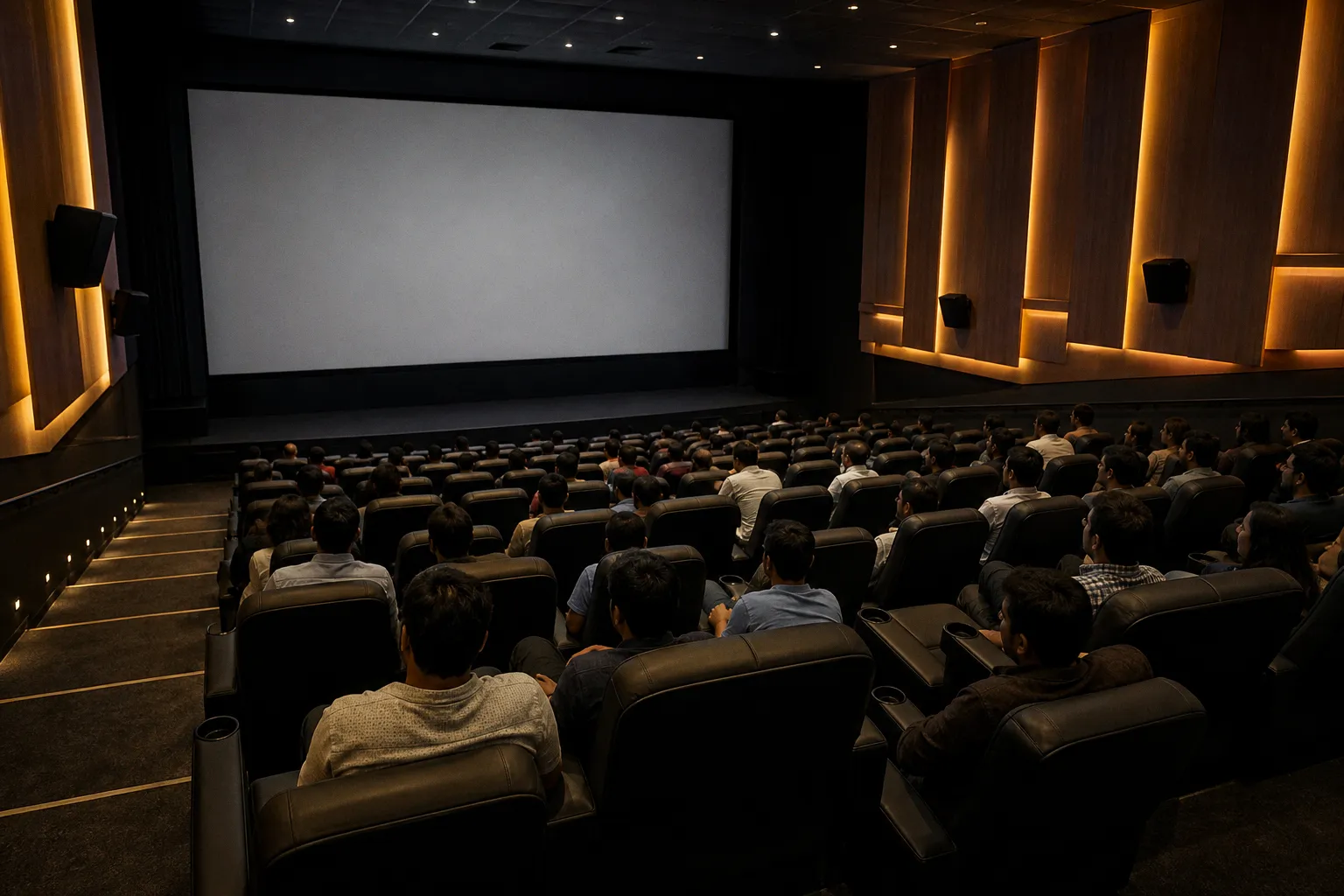
The recovery, as Futuresource analyst Rachel Mitchell frames it, is "becoming increasingly nuanced." Western Europe softened, China fluctuated, but the exhibitors pulling ahead are the ones stacking premium large-format screens, immersive audio, laser projection, and dynamic pricing. Premium formats now account for roughly 16% of North American admissions, and operators are layering revenue through subscriptions, upgraded food and beverage, and event-style programming — live broadcasts, gaming tournaments, concert films.
For Indian multiplex chains and ambitious single-screen operators, the implication is sharp: audiences will pay more per visit, but admissions alone won't carry the business. The visual grammar of exhibition is shifting from cinema-as-default to cinema-as-destination. The growth lives in the experience layer, not the seat count.
Toho's vertical model — a case study in IP leverage
While the global numbers tell one story, Japan's Toho Co Ltd is quietly writing another worth studying. The company behind iconic monster franchises operates production, distribution, its own cinema chain, and a stage-theater business under one roof. Its characters travel globally through licensing deals, appearing in cross-border productions and streaming catalogs, while its theaters coordinate release timing for domestic titles.
This vertical structure solves the central problem of modern exhibition: how to monetize a franchise across formats without losing narrative coherence. For Indian studios sitting on deep mythological, action, and star-driven IP, Toho's playbook — film, live events, merchandise, international licensing — is a template worth pressure-testing.
What to watch from India in 2026
Futuresource expects the global market to cross $41.6 billion by 2030, but growth will stay uneven. For Indian cinema, three things deserve a close eye through the year:
- How aggressively exhibitors invest in premium formats and dynamic pricing, particularly as tier-2 cities expand.
- Whether Bollywood and South Indian studios build genuine franchise ecosystems — with stage shows, themed events, and cross-border licensing — the way Toho has.
- The performance of major tentpoles on the calendar, because the report is unambiguous: results "remain closely tied to the performance of major franchise and event titles."
The thematic resonance here is one any critic recognizes. Cinema isn't contracting — it's being re-engineered as part of the experience economy. The next chapter for Indian filmmakers won't be written in storyboards alone. It will be written in ticket formats, licensing corridors, and the spaces between the screen and the concession stand.