Switch to Spotify or JioSaavn for Bollywood music
The argument over whether to switch to Spotify or JioSaavn for Bollywood music usually starts with one irritating moment: a song drops from a big Hindi film, your group chat is already quoting the…
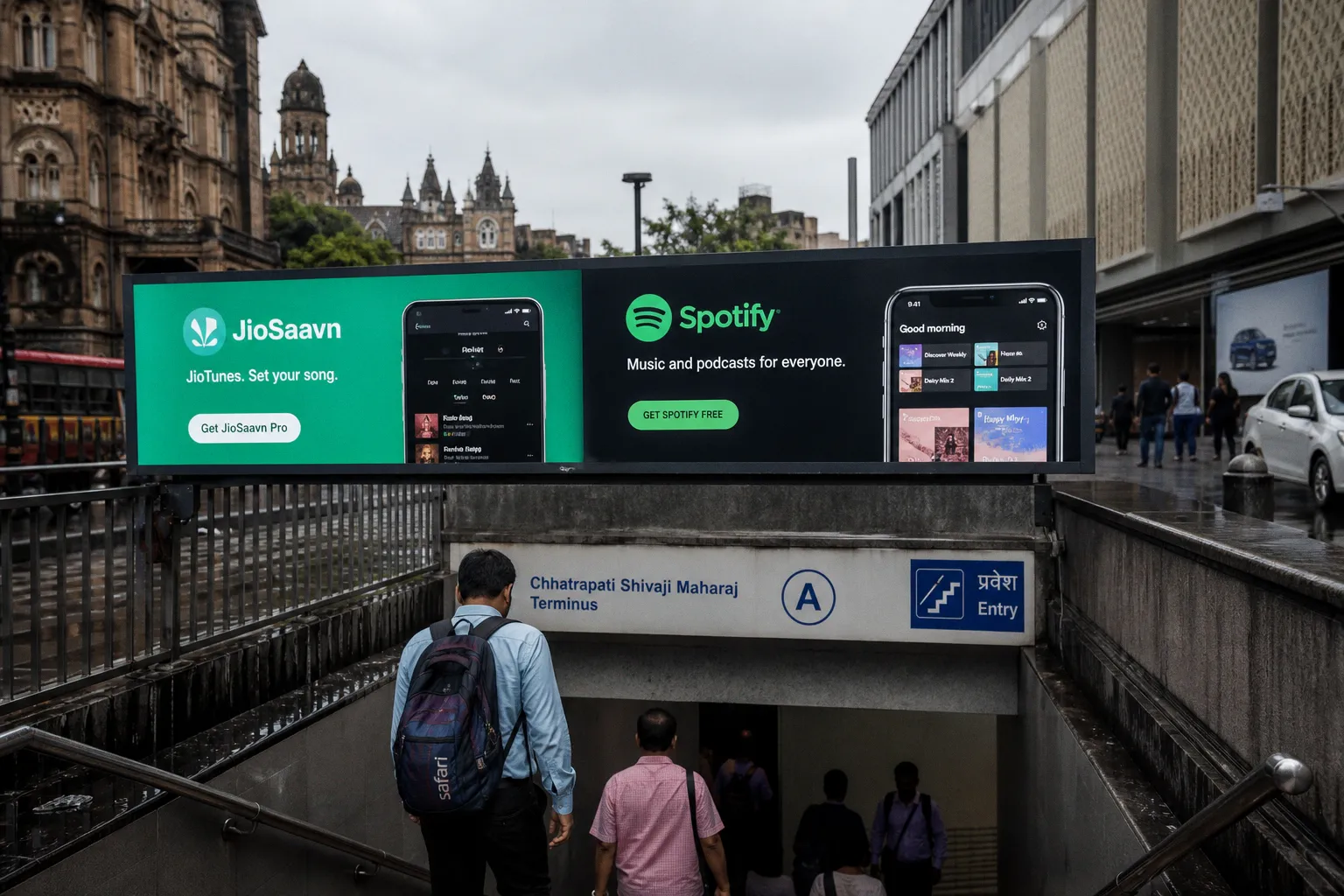
The argument over whether to switch to Spotify or JioSaavn for Bollywood music usually starts with one irritating moment: a song drops from a big Hindi film, your group chat is already quoting the hook, reels are multiplying like unpaid interns, and your app either has it, hides it, or serves you a suspiciously enthusiastic remix instead. That is when “music streaming preference” stops being a lifestyle choice and becomes a small domestic crisis.
So, if you are asking how to check switch to Spotify or JioSaavn for Bollywood music, the honest answer is not “pick the cooler app.” That is PR machinery talk, the kind that turns every platform into a “premium audio destination” with “unmatched experiences.” Please. The real question is sharper: do you care more about discovery, interface, global catalogue and devices — or about regional Indian depth, JioTunes, and the slightly messy but useful local ecosystem that understands how Bollywood actually travels in India?
The discovery war: Spotify’s algorithm has the better manners
Spotify entered India officially in 2019, late enough for everyone to have already built opinions, playlists, loyalties and grudges elsewhere. But Spotify did what Spotify does best: it made discovery feel less like work.
Its Daily Mixes, mood playlists, radio stations and Wrapped circus are not just app features. They are reputation engines. Wrapped, especially, is less a year-end music summary than a mass-participation ego festival: “Look, I am emotionally complex because my top artist is Arijit Singh and my fourth genre is Punjabi pop.” Spotify knows this and leans into it. Curated authenticity, served in neon tiles.
For Bollywood listeners, this matters because Hindi film music is not one clean category anymore. A soundtrack today can include a retro-style dance number, a sad-boy unplugged version, a Punjabi club track, a Sufi-ish anthem, an indie-adjacent love song, and then three remixes designed mainly to haunt mall speakers. Spotify is usually better at connecting these dots across languages, moods and artist ecosystems.
If you listen to “Kesariya,” the app may nudge you toward Pritam, Arijit Singh, Amitabh Bhattacharya, romantic Hindi playlists, and then some independent singer-songwriter track that shares the same emotional weather. Not always brilliantly, but often enough to feel useful.
JioSaavn, by comparison, has historically been stronger when you know what you want: a specific film album, a regional playlist, a devotional morning queue, a new Tamil or Bhojpuri release, or a Hindi oldie your parents will insist was “real music.” Its recommendations can work, but they rarely have the same global-polished confidence as Spotify’s. There is less “I discovered this before it was cool” energy and more “yes, the song is here, stop complaining.”
That is not a small thing. For many Indian listeners, especially outside the metro-English bubble, availability beats aesthetic pleasure. Spotify may feel sleeker, but JioSaavn often feels more rooted in how Indian music consumption behaves: film-first, language-layered, family-shared, and sometimes caller-tune obsessed.
Spotify sells you discovery. JioSaavn sells you proximity. Bollywood listeners need to decide which addiction they are feeding.
Regional roots: where JioSaavn still has teeth
Bollywood may be the headline act, but Indian music streaming is not just Hindi film songs wearing sunglasses. It is Tamil soundtracks, Telugu bangers, Punjabi singles, Marathi film music, Bengali nostalgia, Malayalam mood pieces, Gujarati garba playlists, Haryanvi hits, devotional catalogues, and every hyperlocal trend that becomes viral before Mumbai’s PR machinery has even finished drafting the “pan-India appeal” quote.
This is where JioSaavn’s local muscle counts.
JioSaavn was formed in 2018 through the merger of JioMusic and Saavn, and that history matters. It is not just a music app; it sits near a telecom empire with deep Indian distribution instincts. That does not mean it magically has every track before everyone else, and no one should pretend soundtrack licensing is a neat little spreadsheet. But JioSaavn has often been associated with strong regional Indian coverage and, in some cases, early access to specific regional film soundtracks because of its Reliance Jio ecosystem.
Spotify, meanwhile, has the larger global catalogue. If your listening jumps from A.R. Rahman to The Weeknd to Diljit Dosanjh to a Korean OST to a Coke Studio Pakistan throwback, Spotify handles that identity crisis elegantly. It is built for people whose playlists are less “genre” and more “evidence of unresolved personality layers.”
But if your Bollywood listening sits inside a broader Indian-language habit — say, Hindi on weekdays, Telugu releases on Fridays, Punjabi at the gym, bhajans at home because someone has seized the Bluetooth speaker — JioSaavn has a more local feel.
Here is the cleaner way to compare the two without swallowing either app’s brand deck whole:
| Listening need | Spotify | JioSaavn |
|---|---|---|
| Bollywood discovery | Strong algorithmic playlists, Daily Mixes, artist radios | Good if you know the title, artist, film or language lane |
| Regional Indian depth | Improved, but not always the first place listeners check | Stronger local orientation across Indian languages |
| Global catalogue | Larger and more seamless for international music | More India-first, less global-culture fluent |
| Personalised year-end sharing | Spotify Wrapped is the social media monster | Has its own user features, but less culturally dominant |
| New film soundtrack hunt | Good, but licensing can vary | Often competitive, especially with regional Indian soundtracks |
| Family-style Indian usage | Works well, but feels individual-first | Feels more aligned with telecom-era, mass-market listening habits |
The usual mistake is treating “Bollywood music” as one stable thing. It is not. A Karan Johar album, a Rohit Shetty item song, a Vishal Bhardwaj soundtrack, a T-Series remix, a South-to-Hindi dubbed hit, and a viral indie track absorbed into film marketing all live under the same giant umbrella. No single app wins all of that all the time.
JioTunes is not glamorous, but it is very Indian
Let us talk about the feature Spotify does not really answer: JioTunes.
JioSaavn allows users to set songs as caller tunes directly from the app through JioTunes. Spotify does not natively offer this. In a market where caller tunes remain a surprisingly durable form of self-expression — somewhere between nostalgia, flex, and accidental public confession — this is a real advantage.
It is easy for the urban streaming snob to laugh at caller tunes. But Bollywood has never lived only in headphones. It lives at weddings, in autos, in gyms, in salons, in elevators, in cousins’ reels, in ringtone culture, in political rallies that should probably not be using that romantic chorus, but here we are. JioTunes taps into that older, wider circulation system.
Spotify is better at making your music identity look good on Instagram. JioSaavn is better at letting your uncle discover your current emotional state before you even answer the phone.
That sounds like a joke, but it reveals the platforms’ personalities. Spotify is individualised, design-forward, socially shareable in a global template. JioSaavn is more woven into the Indian telecom and entertainment habit loop. The app is available beyond Jio users, so it is not “only for Jio people,” but its integration with Jio services gives it a local utility Spotify does not match.
If your Bollywood life includes caller tunes, family phones, regional search habits and telecom convenience, JioSaavn has a boring advantage. And boring advantages win more often than tech reviewers like to admit.
Pro vs Premium: the subscription fight is less dramatic than the branding suggests
Both platforms understand the basic ransom note of modern streaming: pay us, and we will remove the ads, unlock downloads, and stop interrupting your heartbreak playlist with detergent jingles.
JioSaavn Pro includes ad-free listening, unlimited downloads and high-quality audio up to 320kbps. Spotify Premium also includes ad-free listening, offline downloads and high-quality streaming. On paper, this part of the comparison is less “epic showdown” and more “same apartment, different curtains.”
For most Bollywood listeners using regular earbuds, Bluetooth speakers, car audio or smart TVs, both platforms are good enough in audio quality. The difference is rarely about bitrate in the abstract. It is about the chain: your phone, your earbuds, your network, your downloaded file quality, your car speakers, and whether the track itself was mastered like a song or like a festival cannon.
A lush Vishal-Shekhar track, a Sanjay Leela Bhansali-style orchestral sweep, or a Rahman composition with tiny background flourishes will benefit from better audio settings and decent headphones. But if you are streaming a compressed remix through a cheap Bluetooth speaker in traffic, no subscription tier is going to turn it into Abbey Road.
The more useful subscription question is behavioral:
1. Do you download music often?
If you travel, commute through patchy networks, or live in an area where mobile data behaves like a moody supporting actor, offline downloads matter. Both Pro and Premium cover this.
2. Do ads ruin the mood for you?
Bollywood listening is emotional whiplash by design. A ghazal followed by an insurance ad is a crime against pacing. Both paid tiers remove that nonsense.
3. Do you listen across languages?
If your downloads lean heavily into Indian regional catalogues, JioSaavn may feel more direct. If your offline library jumps across global artists and Bollywood, Spotify’s library management feels smoother.
4. Do you care about playlist intelligence?
Spotify Premium plus its recommendations can feel like a stronger overall package if discovery is your main sport.
5. Do you use caller tunes?
Then JioSaavn has the practical edge. Spotify can look cool; it cannot set your JioTune from inside the app.
The paid tier does not decide the winner. Your listening habits do. Very inconvenient for anyone hoping for a clean fan-war verdict.
Devices, speakers and the quiet power of convenience
The most underrated part of music streaming is not the catalogue. It is where the music follows you without making you negotiate.
Spotify is stronger on smart home and cross-platform performance. It integrates well with Alexa, Google Home, gaming consoles and a broad range of connected devices. That matters if your Bollywood listening moves from phone to laptop to speaker to TV to console without ceremony.
Spotify Connect is one of those features people stop noticing once it works. You play a song on your phone, move it to a speaker, control it from another device, and suddenly you feel like you live in an ad for tasteful productivity. The brand synergy is irritatingly effective.
JioSaavn also supports cross-platform streaming, and for many everyday users it will be perfectly fine. But Spotify’s device ecosystem feels more mature, especially for people who use multiple gadgets and expect the app to behave like a polite butler. JioSaavn is more likely to feel like an India-first music library that also streams across devices. Spotify feels like a global device layer that happens to contain a growing Indian music universe.
That distinction matters in real rooms.
If your Bollywood playlist is mainly phone-and-earbuds, both apps can serve you well. If your music moves through smart speakers, party systems, gaming setups or work laptops, Spotify’s edge becomes clearer. The app is simply better at being everywhere without asking for too much attention.
There is also a social element. Spotify links, playlists and Wrapped graphics travel well across platforms. The app has trained users to share music as identity performance. JioSaavn can be social, but Spotify has made sharing feel like part of the product’s emotional architecture.
This is where the comparison starts to resemble any modern attention economy — music apps, streaming platforms, even event and launch ecosystems like crypto news and conference updates all understand the same rule: discovery is not enough; the experience has to circulate.
Bollywood music circulates brutally fast. A song can go from film promotion to dance challenge to wedding choreography to political meme to cringe remix in a week. The app that helps you catch, save, share and replay that movement has more power than the app that merely stores the track.
Licensing, exclusivity and the soundtrack waiting game
Here is the part no app campaign wants to say loudly: sometimes the song you want is not where you expect it to be because licensing is messy.
Bollywood soundtracks do not float freely into every app at the same time because music labels, film studios, streaming services and platform partnerships all have their own arrangements. Exact exclusivity periods are not always public, and pretending otherwise is influencer-level confidence. What we can say is that JioSaavn often benefits from its local partnerships and has a strong foothold in regional Indian film music, while Spotify brings the weight of a global catalogue and excellent discovery once the content is available.
This means the “best” app can change depending on the release cycle.
A major Hindi film album might appear across platforms quickly. A regional soundtrack may show up earlier or feel easier to find on JioSaavn. An independent artist who is building a global audience may be more visible on Spotify. A remix might exist under slightly different metadata, which is the streaming equivalent of hiding the remote in a different room.
For Bollywood listeners, metadata matters more than people admit. Song titles can appear in Hindi, English transliteration, film album format, single format, remix format, or under the singer’s name rather than the composer’s. Spotify’s search is generally strong, but JioSaavn’s Indian-language familiarity can help when dealing with local catalogues.
If you are comparing the two, do not just search for one obvious blockbuster song. Test your actual listening personality:
- Search for a new Hindi film soundtrack you care about.
- Search for a regional film album in a language you regularly play.
- Search for a 2000s Bollywood song with messy spelling or multiple versions.
- Search for a playback singer’s deep cuts, not just the top five hits.
- Search for a lyricist or composer-led album if you listen that way.
- Search for remixes only if you are emotionally prepared for what the internet has done.
This is the closest thing to a useful answer for how to check switch to Spotify or JioSaavn for Bollywood music India: build a small test playlist of songs you genuinely use, not songs a reviewer thinks sound impressive. Include one new release, one regional track, one old Bollywood favourite, one party song, one sad song, one devotional or family-request track if that is part of your real life, and one independent or non-film artist. Then see which app gets you there faster, cleaner and with better next-song suggestions.
That test will tell you more than a hundred brand slogans.
The Bollywood listener is not one person
The streaming debate gets silly because people argue as if there is one ideal Bollywood listener sitting in a lab, wearing neutral headphones and making rational choices. In reality, Bollywood music listening is chaotic and social.
There is the commuter who wants downloaded Arijit songs and no buffering. The gym listener who needs aggressive remixes and will not apologise. The film nerd who follows composers, lyricists and background score releases. The family DJ who needs Hindi, Punjabi, Tamil, devotional and 90s nostalgia within five minutes. The global desi listener who wants Bollywood next to Drake, AP Dhillon, Taylor Swift and Coke Studio. The caller-tune loyalist who treats incoming calls as a branding opportunity. The playlist curator who waits for Wrapped like exam results.
Spotify is better for some of these people. JioSaavn is better for others.
Spotify fits listeners who want:
- stronger algorithmic discovery and Daily Mix-style recommendations;
- a larger global catalogue alongside Bollywood;
- cleaner device integration with smart speakers and consoles;
- social sharing that feels polished and culturally current;
- a slicker interface with better playlist behavior.
JioSaavn fits listeners who want:
- deeper comfort with Indian regional music habits;
- JioTunes and caller tune integration;
- a more local entertainment ecosystem;
- strong access to Indian film and non-film catalogues;
- a service that feels built around Indian listening quirks rather than adapted for them.
Neither platform should get a devotional aarti from the public. Spotify can occasionally feel like it is translating Indian music into a global interface that does not always understand the local messiness. JioSaavn can feel less elegant, less predictive, less shiny. Both can disappoint you on the one song you wanted at 11:47 p.m., which is, naturally, the only song that mattered.
So, should you switch?
If your Bollywood listening is part of a wider global music habit, switch to Spotify or stay there. It is better at discovery, better across devices, better at making your listening feel connected, and far better at turning your taste into shareable personality content. The PR machinery calls this “personalisation.” The rest of us call it “the app knows too much, but the playlist is good.”
If your listening is India-first, language-rich, caller-tune friendly and tied to regional film releases, JioSaavn deserves more respect than the Spotify loyalists usually give it. Its JioTunes feature alone gives it a practical cultural use that Spotify simply does not have. Add regional depth and local ecosystem familiarity, and the case becomes strong.
The smartest move is not loyalty. It is a small audit of your real habits. Look at what you play in a normal week, not what you wish your taste looked like on social media. If the songs are mostly Bollywood plus global pop, Spotify will probably make you happier. If they are Bollywood plus regional Indian music plus caller tunes plus family-demand listening, JioSaavn may be the better daily tool.
My cynical prediction? Plenty of users will keep both: Spotify for the personality, JioSaavn for the practicality. One app for discovery and social polish, the other for local utility and that one soundtrack which mysteriously arrives where the other app is still pretending the remix is enough.
That is not elegant. But Bollywood music has never been elegant in its distribution. It is loud, emotional, opportunistic, brilliant, over-marketed and everywhere. The right streaming app is the one that survives that chaos with the fewest eye-rolls.