Why Punjab Villages Are Resurrecting the Banned Film Satluj
When a streaming giant quietly scrubs a film from its global catalogue — no press release, no explanation, just an algorithmic vanishing act — the story is no longer just about cinema.
The film ZEE5 tried to bury
Satluj, starring IHG Dosanjh, is built around the kind of thematic resonance that rarely survives the sanitised commissioning process of mainstream Indian streaming. The film reportedly engages directly with Punjab's agrarian wound — the long shadow of state violence, the quiet complicity of district administrations, and the simmering unrest that has defined the state's political imagination for years. According to industry chatter circulating in trade circles, specific scenes depicting police action against protesting farmers were the flashpoints that drew discomfort from political quarters.
What is confirmed is the silence. ZEE5 has issued no public statement explaining the takedown, and the film vanished from the platform without a formal announcement. The lack of explanation is itself a kind of editorial choice — one that speaks volumes about the visual grammar of censorship in the OTT era, where a single backend click can erase a work of art from millions of screens overnight.
A parallel distribution network, born of mattresses and projectors
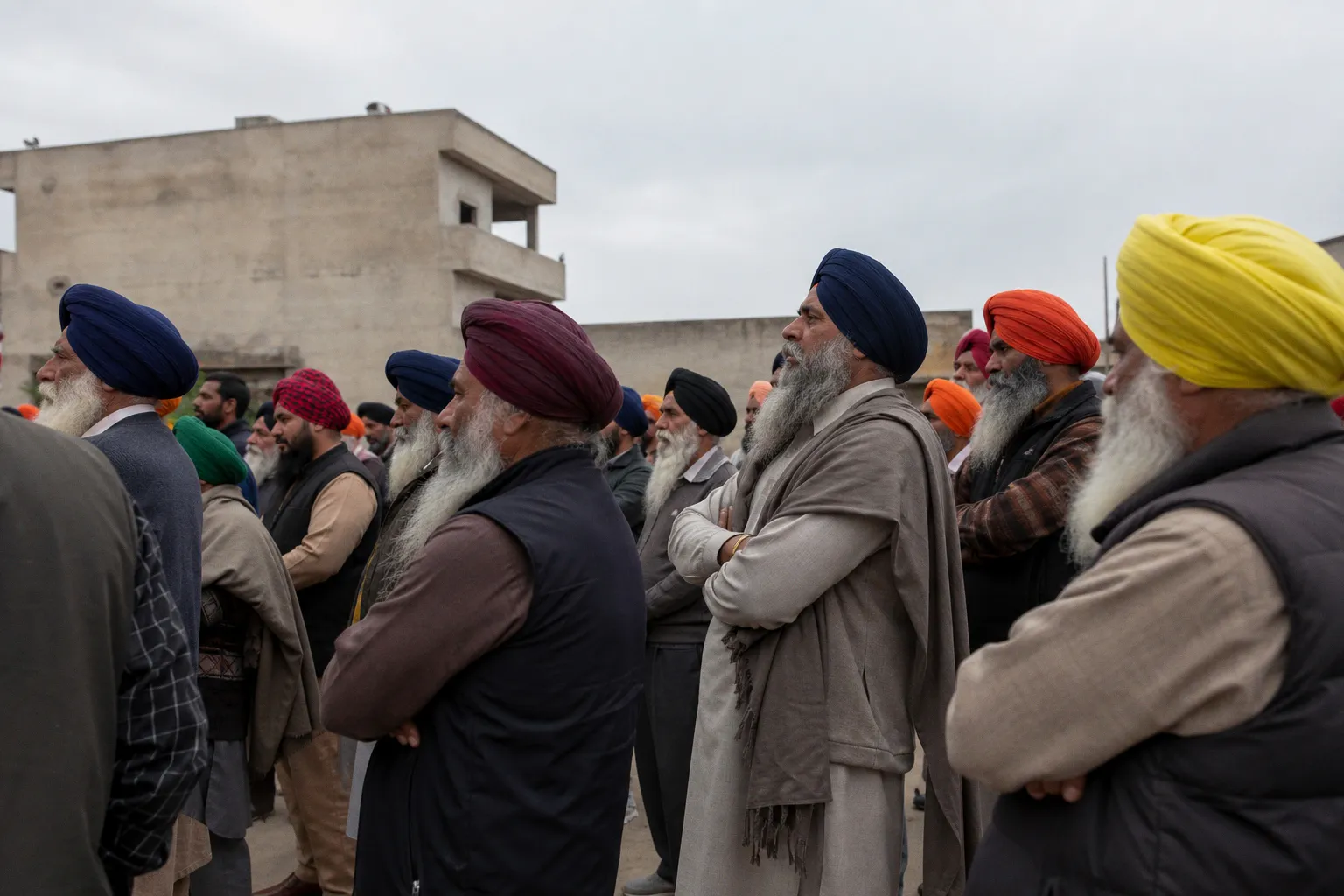
What the platform apparently did not anticipate is that rural Punjab does not run on its servers. Within weeks of the takedown, a quiet, efficient parallel distribution system emerged across multiple districts. Mansa, Bathinda, and Sangrur — the heartland of the state's agrarian distress — have become particularly active hubs for these gatherings, which range from twenty to a hundred people in a single courtyard or community hall.
The screening infrastructure is almost defiantly simple. A borrowed projector balanced on a plastic chair, a white wall or a stretched bedsheet, and a WhatsApp message to the neighbourhood. No ticket, no platform, no algorithm deciding who sees what. The films circulating on USB drives and portable hard disks are organised by local cultural groups, farmer unions, and sometimes by a family that owns a projector and simply feels the story belongs to their lives. It is grassroots cinema distribution in its most elemental form — and it has done what no marketing campaign could.
What this moment means for Indian storytelling
There is something deeply instructive about watching a platform's quiet takedown become a cultural movement. Satluj's distribution trajectory now reads less like a film release and more like samizdat — the Soviet-era practice of passing forbidden texts hand-to-hand. The film's reach has, paradoxically, been amplified by the very act meant to contain it. Its character arc as a piece of public discourse has grown larger than anything a streaming homepage could have offered.
For the Indian entertainment industry, this episode sits at a fault line that is becoming impossible to ignore. When a platform can remove a film with no explanation, and when that removal provokes cottage-industry screenings rather than silence, the relationship between streaming services and regional storytelling is being renegotiated in real time. The craft of political cinema in India — its pacing, its directorial restraint, its willingness to hold uncomfortable frames — depends on whether distribution ecosystems are willing to protect that work, or whether the next Satluj will need to be passed around on a USB stick before it ever reaches an audience.