Best Bollywood songs of all time and why they never fade
Lata Mangeshkar reportedly recorded over 25,000 songs across multiple Indian languages before she passed in 2022 — a number so absurd it stops functioning as a discography and starts reading like a…
Lata Mangeshkar reportedly recorded over 25,000 songs across multiple Indian languages before she passed in 2022 — a number so absurd it stops functioning as a discography and starts reading like a deliberate flex against the entire concept of streaming metrics. A decade later, the average Bollywood playlist on any global DSP still leans on her voice for the emotional anchor point. This is not nostalgia. This is infrastructure. And it is the first reason any listicle claiming to rank the best Bollywood songs of all time is, on some level, fighting the wrong battle.
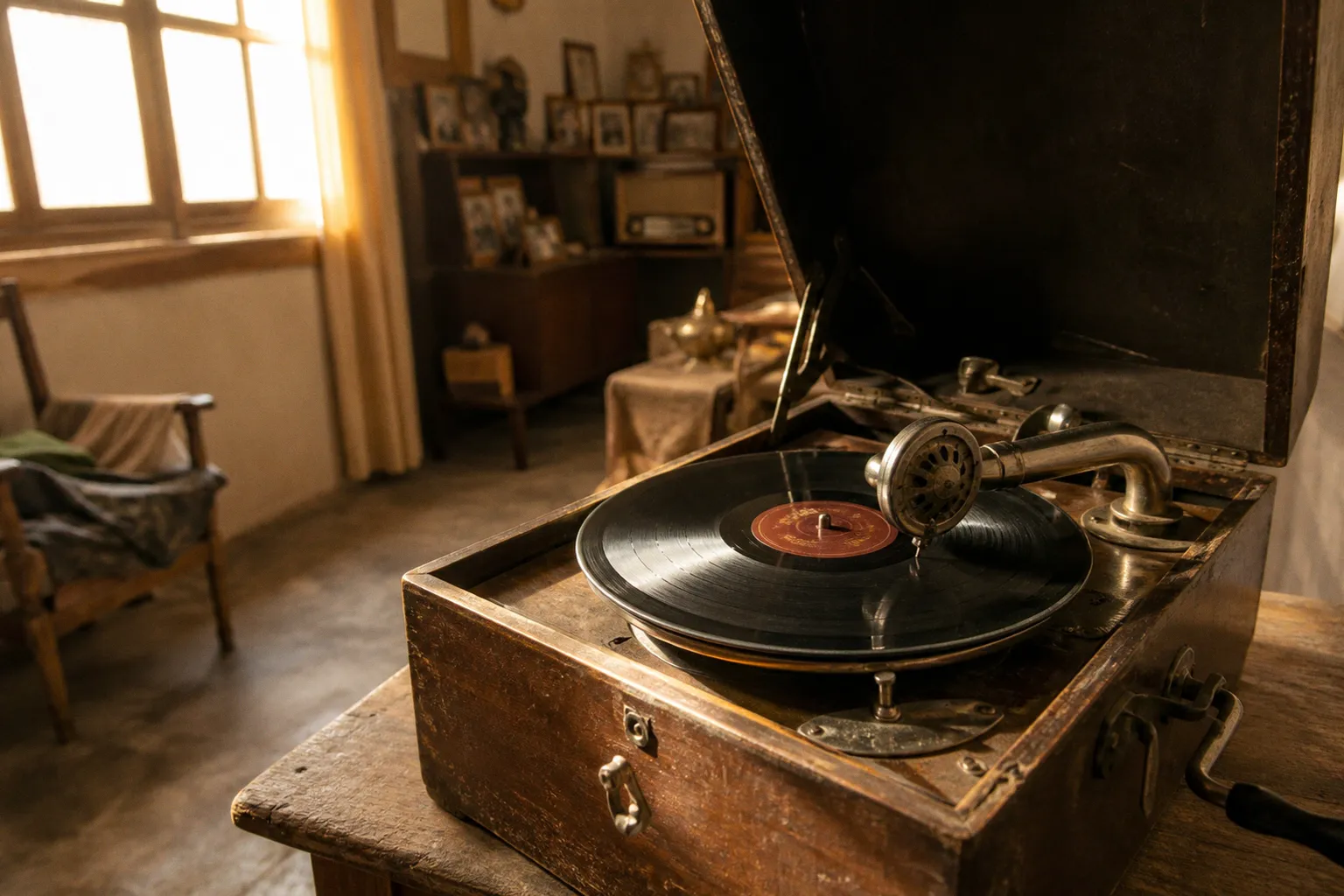
The second reason is structural. Hindi film music was never designed to live or die by the chart cycle. It was designed to be re-issued, re-mixed, re-sung, re-uploaded and replayed until the original delivery mechanism — film, vinyl, cassette, CD — became irrelevant. That is not a property of any single song. That is a property of the system that produced them.
The 1951 Blueprint: How a Soviet-Famous Song Rewrote the Export Playbook
Long before "soft power" became a LinkedIn-approved strategy, Hindi film music was already a soft-power export with the receipts. The 1951 Raj Kapoor vehicle Awaara — scored by the composer duo Shankar-Jaikishan, with Mukesh on playback — produced "Awaara Hoon," which reportedly achieved massive popularity in the Soviet Union, China and the Middle East in the years following release. No PR machinery. No brand synergy. No Instagram rollout. Just a melody, a Soviet dub, and the kind of cultural stickiness money still cannot reliably manufacture.
Bollywood music wasn't built to be ranked. It was built to outlast the technology that delivered it.
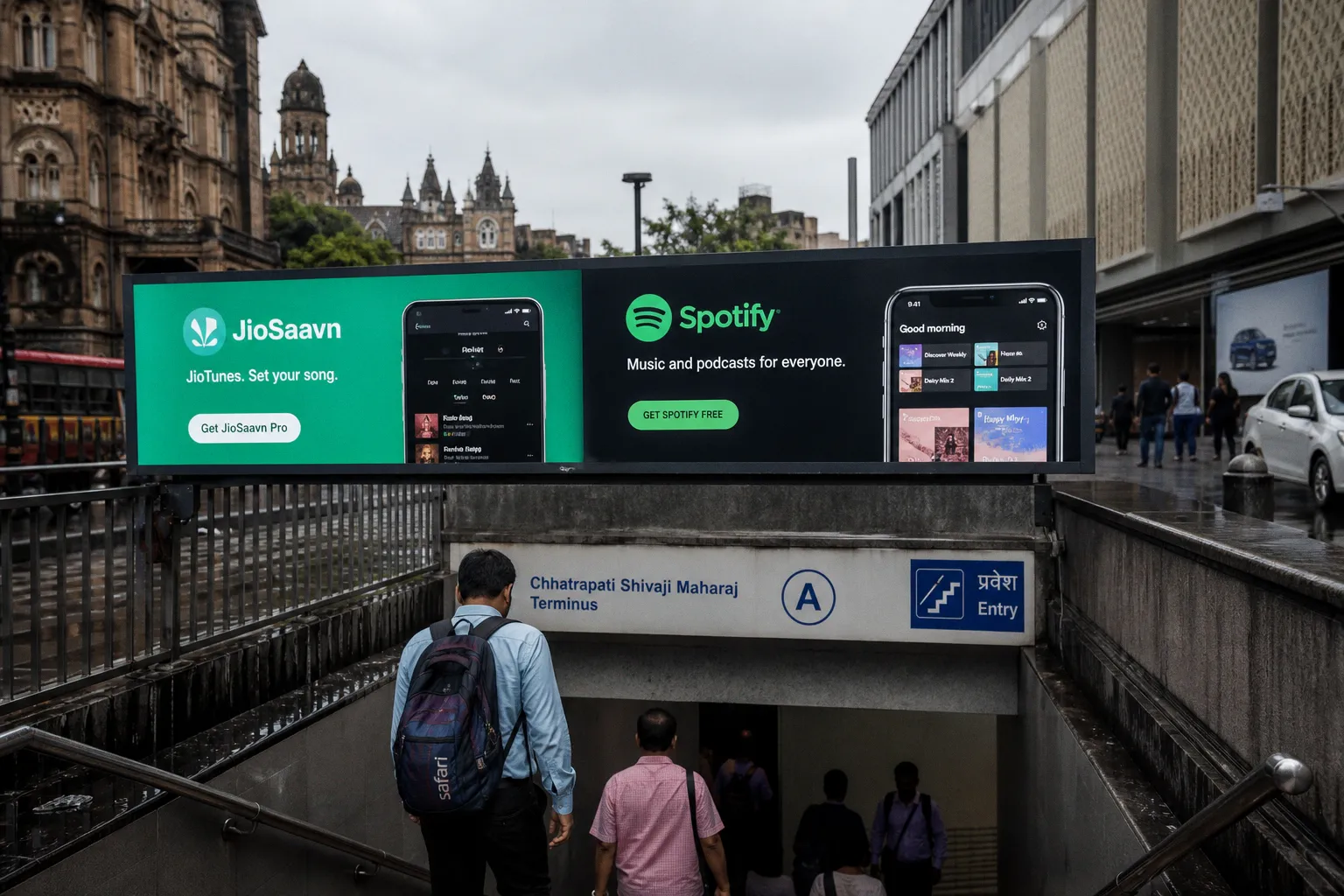
This is the inconvenient backdrop for every streaming-era ranking. The songs that score highest on "evergreen" replay metrics were not optimized for any platform. They were optimized for the longest possible cultural half-life. The fact that they now live happily inside Spotify's auto-generated "Bollywood Classics" mood-board playlist is almost an afterthought.
The Playback Hack: Why the Voice Has Always Been Borrowed
Indian cinema's defining musical convention — playback singing — has been around since the 1930s, the moment sound arrived with Alam Ara in 1931. The mechanic is brutally efficient: actors lip-sync on screen while professional vocalists record in the studio. In a Western musical tradition this would read as cheating. In Mumbai it became the entire point.
The benefits are practical, not cosmetic. Studio recording lets producers match vocal range, diction, and emotional register to the song's actual demands rather than the actor's natural ceiling. It allowed the industry's most enduring voices — Lata Mangeshkar, Mohammed Rafi, Kishore Kumar — to record thousands of songs without appearing in a single frame. It also created a clean separation between the song as a commercial object and the film as a release vehicle. Once that separation exists, the song can outlive the film, the actor's career arc, and even the original composer. Which is why a track from 1954 can still pull replay weight on a 2025 playlist.
This is the original content factory — long before "content" became a corporate noun. The actor is the billboard. The singer is the engine. The composer is the architect. Everyone else is downstream.
Golden Era Architects: The Composer-Singer-Lyricist Trinity
Calling the 1950s–1970s the "Golden Era" is one of Bollywood's better PR wins — it has stuck for seventy years. Underneath the romance, though, sits something more interesting: a working production line where composer, singer, and lyricist operated as a tight triangle, and individual genius was almost always collaborative genius.
The three composer names that anchor the era — Naushad, S.D. Burman, and R.D. Burman, paired with the voice bank of Lata, Rafi, and Kishore — were not interchangeable. Each brought a specific flavour to the table:
| Composer | Era active | Signature move | Why it stuck |
|---|---|---|---|
| Naushad | 1940s–1970s | Classical Hindustani grounding, orchestral scale | Anchored the "epic" sound for Mughal-e-Azam and Mother India |
| S.D. Burman | 1950s–1970s | Folk roots, Bengali sensitivity, restraint | Produced some of Rafi's most narrative-driven vocal performances |
| R.D. Burman | 1960s–1990s | Western rock, jazz, funk fusion | Modernised Hindi film music before "modernisation" was a brief |
The trick is that none of these composers wrote alone. The melody, the lyric, the arrangement, and the singer's phrasing were all negotiated. R.D. Burman's reputation for introducing Western elements — rock, jazz, funk — into Bollywood in the 1970s is well documented, but those experiments rarely landed without a singer willing to interpret them and a lyricist willing to make room. That is the part the "auteur composer" framing conveniently skips.
Lata Mangeshkar, who held a Guinness World Record for many years on the strength of those 25,000-plus recordings, was the engine room of the entire system. Mohammed Rafi's versatility across genres, languages, and vocal personas gave the era its emotional range. Kishore Kumar made the voice itself a personality. None of them could have done what they did inside a tradition that put the actor's natural singing voice on the track.
Technical Innovation Buried in the Track
A lot of the era's "magic" was actually engineering decisions that have been quietly forgotten. "Pyar Kiya To Darna Kya" from Mughal-e-Azam (1960) is widely cited for the technical choices that went into it, including being one of the first Bollywood songs filmed in colour and a complex echo effect recorded in-studio. That echo was not a mood-board choice. It was a studio experiment that became part of the song's emotional vocabulary.
The pattern repeats through the era and beyond. Composers were not just writing melodies; they were testing the limits of what a recording could do with the technology available. That experimental instinct is part of why the songs read as "timeless" rather than period pieces. The production choices were aggressive enough to age into classics instead of relics.
The 1994–95 Soft Pivot: When Jukebox Replaced Theatre
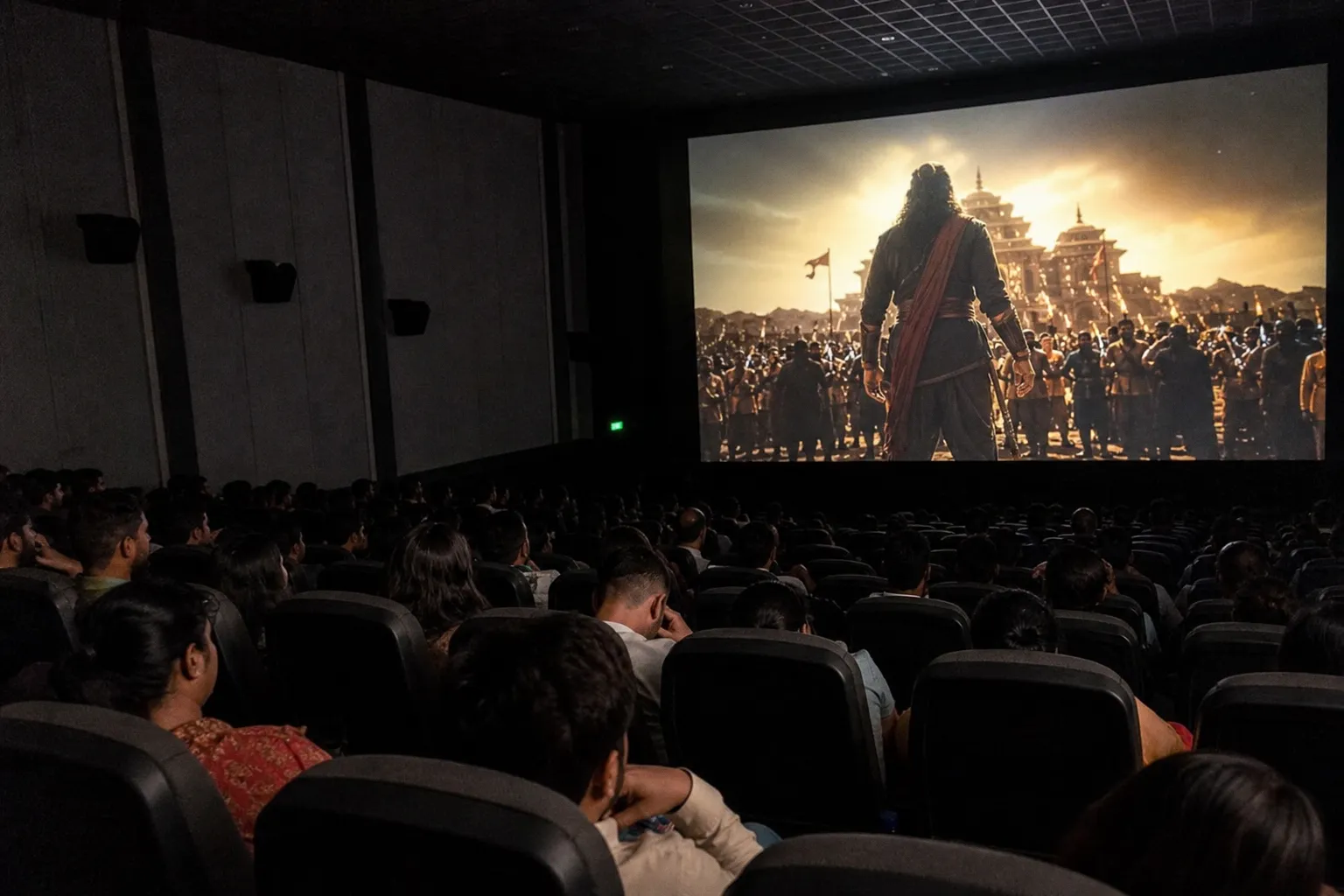
By the mid-1990s, the economics of listening had quietly inverted. Indian audiences no longer had to visit a theatre to encounter a film's songs. Cassettes had done their job. CDs were doing it. The song was now the primary unit of consumption and the film was effectively the trailer.
Two tracks sit near the statistical centre of this shift. "Chura Ke Dil Mera" from Main Khiladi Tu Anari (1994) and "Tujhe Dekha To" from Dilwale Dulhania Le Jayenge (1995) are both regularly flagged in streaming data among the most-replayed Hindi film songs in existence. Note the timing: this is the precise window when the "musical blockbuster" became the dominant commercial template. Aashiqui (1990) is the usual reference point, but 1994–95 is when the model fully hardened into a release formula.
What is striking is the longevity math. A 1994 track on a 2025 streaming chart is competing with songs released the same week. It is winning, or close to winning, on pure replay volume. There is no algorithm-tweaking that explains this. There is just a melody, a voice, and a generation that grew up pressing rewind on a cassette deck until the tape warped.
Why the Algorithm Can't Kill Them
Streaming platforms have spent a decade trying to convince listeners that "fresh" and "trending" are the same thing. Hindi film music has quietly refused to cooperate. The evergreen replay data keeps showing the same patterns:
- Pre-2000s tracks collect passive listenership at a rate newer releases cannot match. They are the default background of playlists built around mood, not release date.
- The "discovery" problem flips: new songs need a campaign to find an audience. Old songs need a campaign to be ignored.
- The longest-lasting tracks tend to be the ones with the simplest structural hooks — a phrase, a modulation, a vocal line the listener can hold in working memory without effort.
- Remixes, covers, and re-releases keep the originals in circulation. The originals themselves rarely disappear; they get reissued, re-licensed, and folded into fresh soundtracks as a kind of brand-synergy shortcut.
This is the part the modern release pipeline — drop a single, push a video, run the campaign, rotate to the next — does not account for. The Golden Era infrastructure was designed to survive a hostile environment. Today's strategy is designed to survive a single news cycle. The damage control kicks in when the new release underperforms and the playlist curators quietly slide a 1989 Lata track back into rotation to lift the average.
The Curious Case of the Next Wave
None of this is a verdict on current Bollywood music. The release pipeline today is faster, more global, and arguably more inventive than at any point in the industry's history. What is harder is the follow-through: building a song so durable that a kid in 2045 puts it on a playlist without checking the year.
That is the cynical, probably accurate prediction. The next genuinely credible candidate for the best Bollywood songs of all time conversation will not announce itself. It will surface in a regional playlist, get folded into an algorithm's mood-board, and quietly start its second decade of replay while the campaign that launched it is already a footnote. The infrastructure is still in place. The audience is still listening. The only question is whether the next round of composers, lyricists, and singers are building for the long half-life — or just the launch week.
The listicles will keep dropping. The 25,000-song voice will keep appearing on them. So far, the system is winning.